

Edge grain, end grain, or plank?
Edge grain is the best all-round kitchen countertop: stable, the most affordable, and available in large one-piece sizes. End grain is the premium choice for a dedicated chopping surface, because knife edges slip between the wood fibers instead of cutting across them. Plank (face grain) shows off wide boards for a furniture look on islands, desks and bars.
Same wood, three ways to glue it up.
Every butcher block starts as boards of solid hardwood. What changes is which face of the wood ends up on top, and that one decision sets the look, the feel under a knife, the stability and the price.
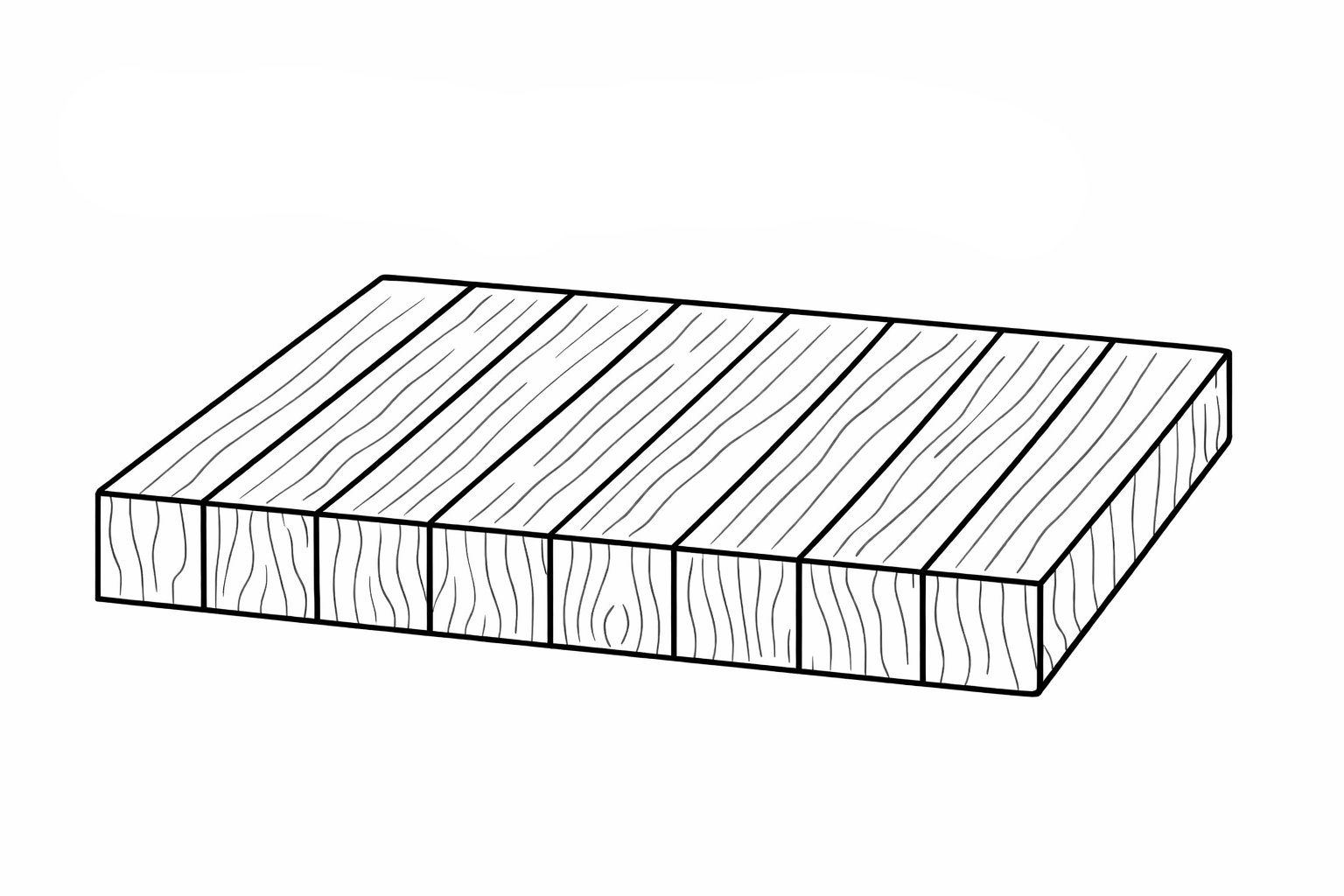
Edge grain
Each board turned on its narrow edge and glued side by side, so the top shows long, even stripes. The stiffest and most stable of the three, which is why most kitchens get it.
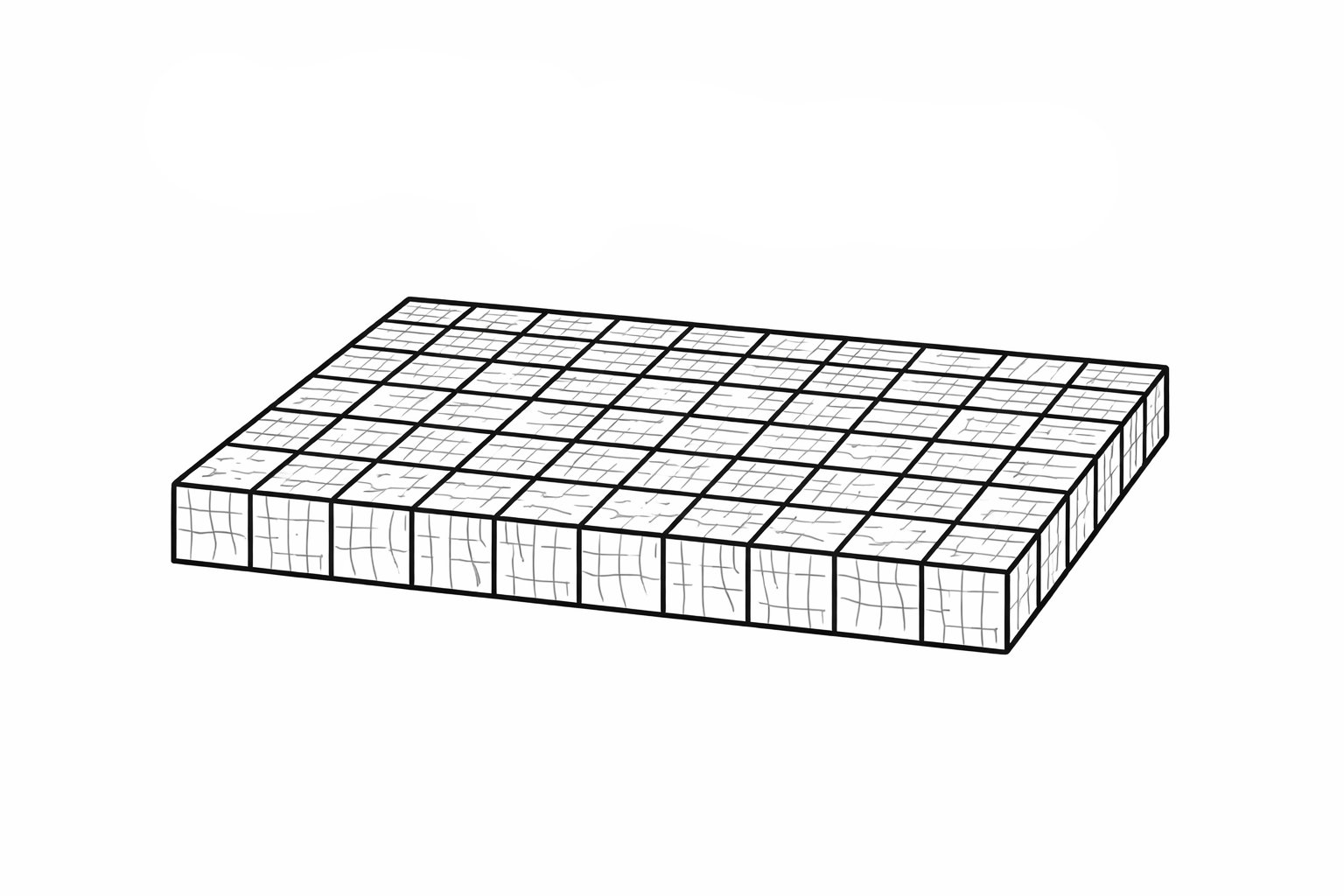
End grain
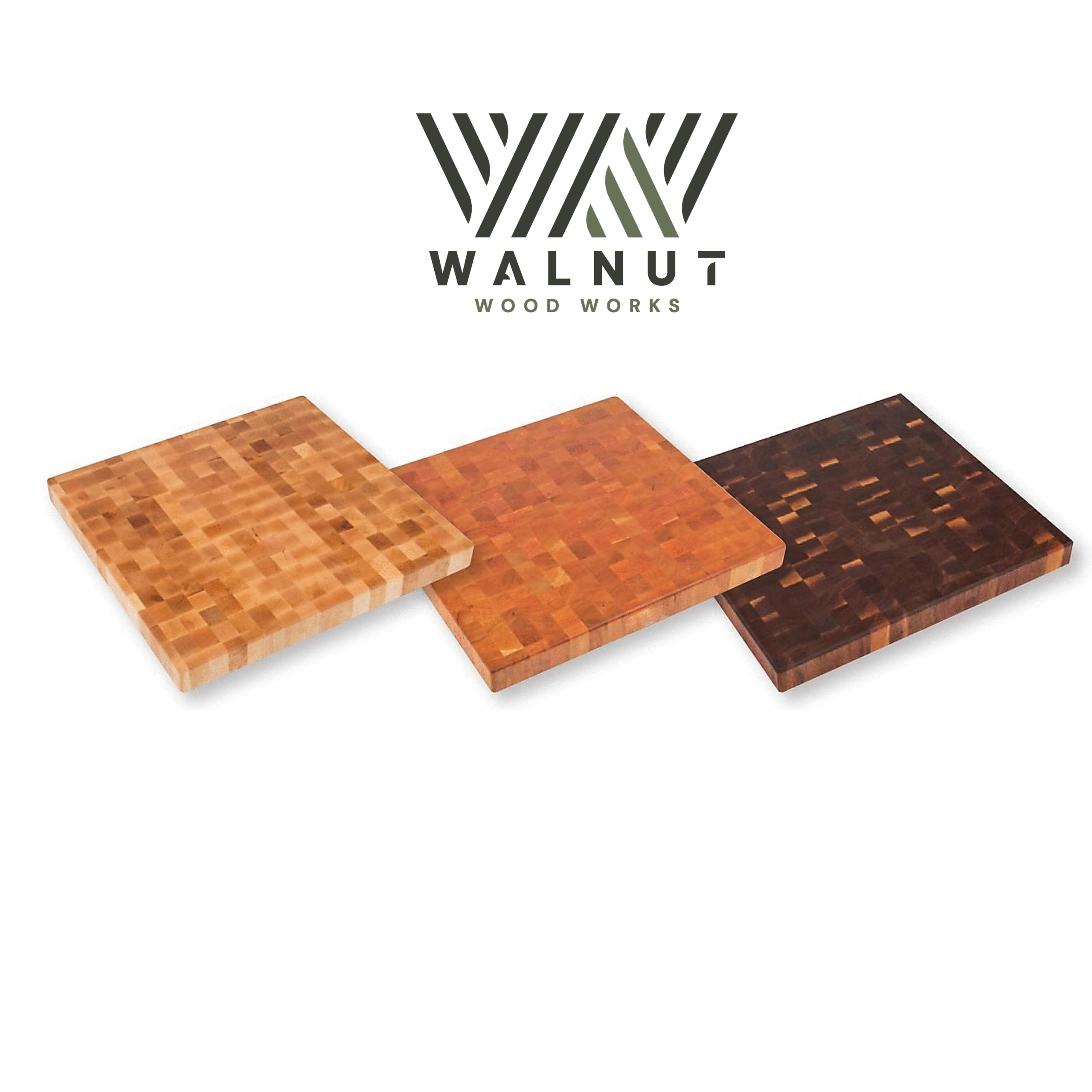
Strips cut into short blocks and stood on end, so you look down into the growth rings in a checkerboard. A knife slips between the fibers, so the surface "heals" and blades stay sharp.
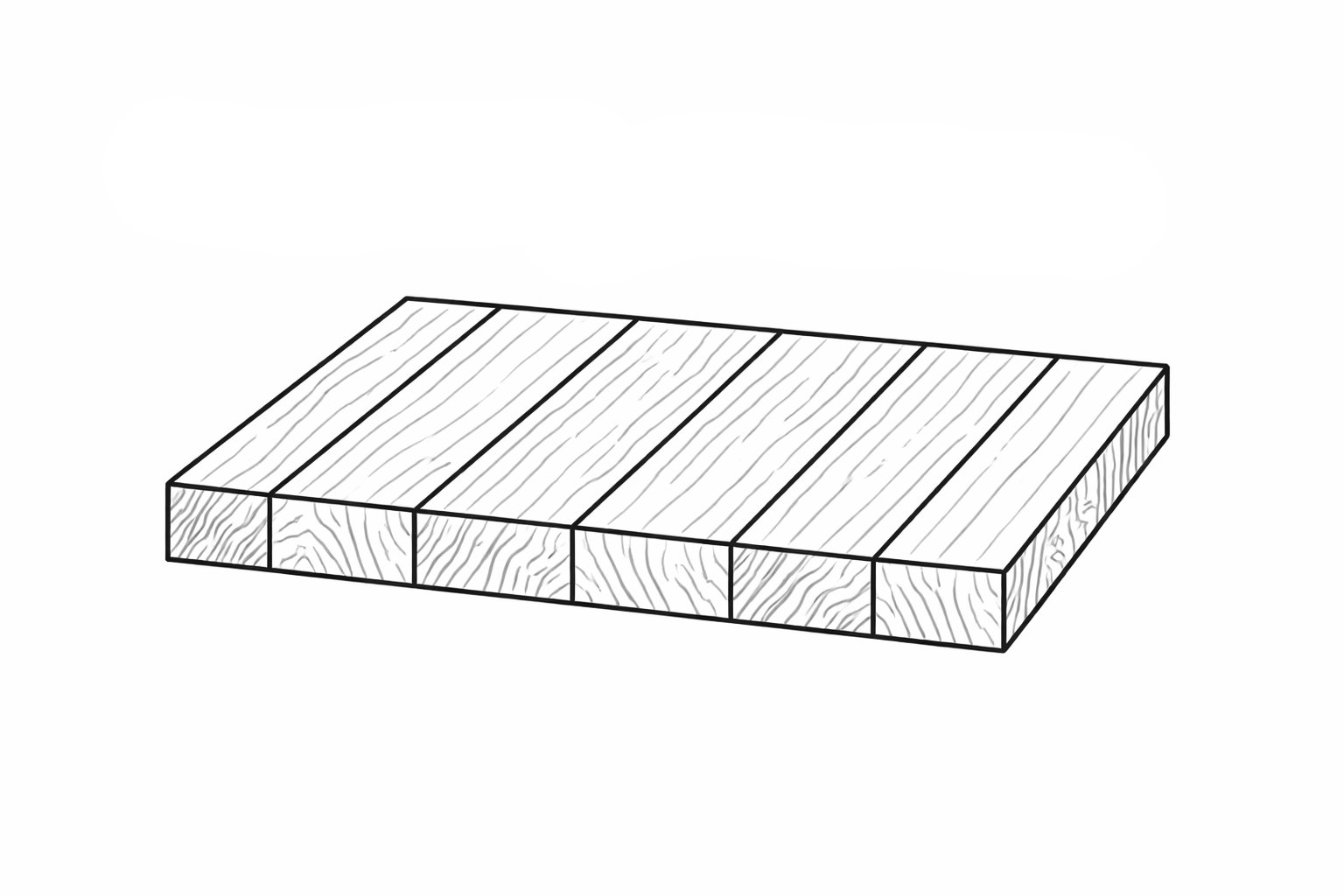
Plank
Wide boards laid flat, so you see each board's full cathedral grain, like a dining table. The most furniture-like look and the least suited to heavy chopping.
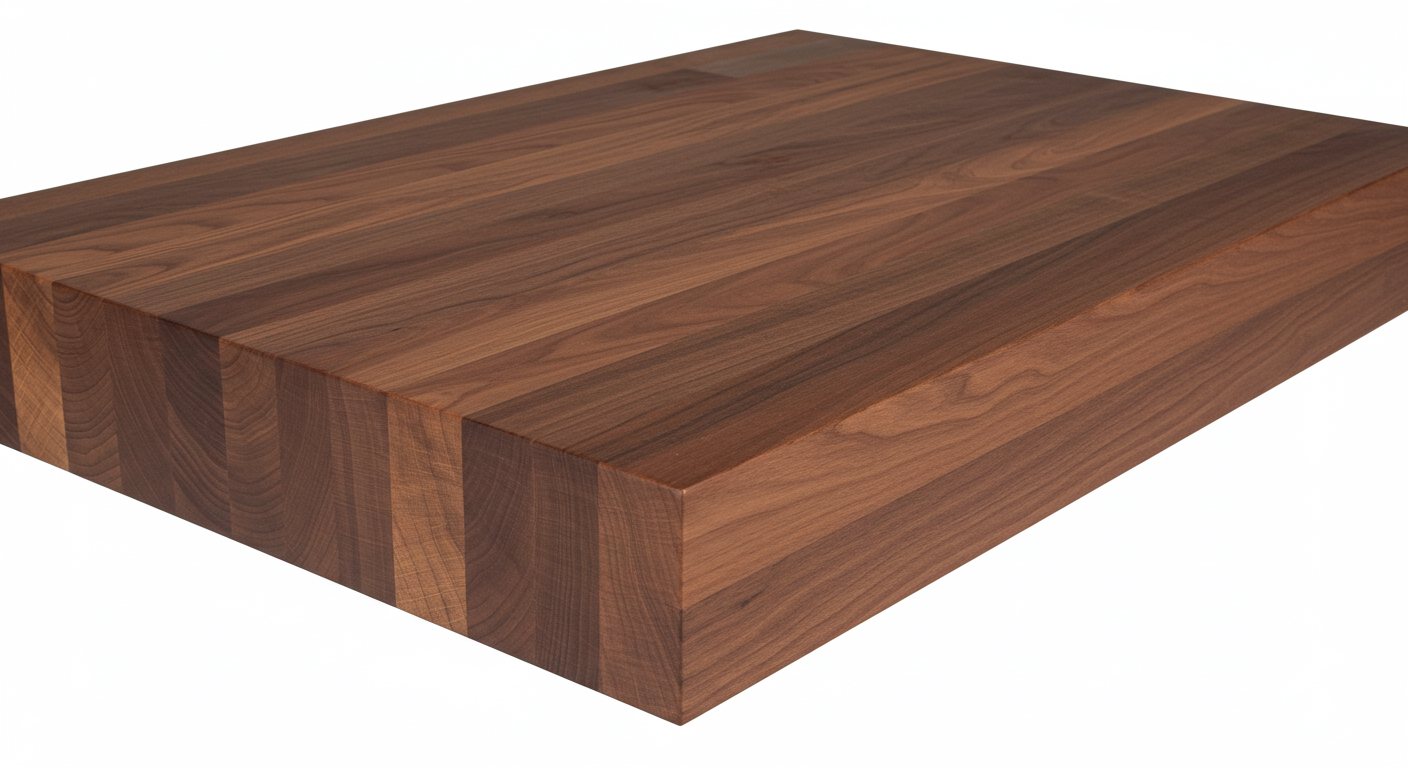
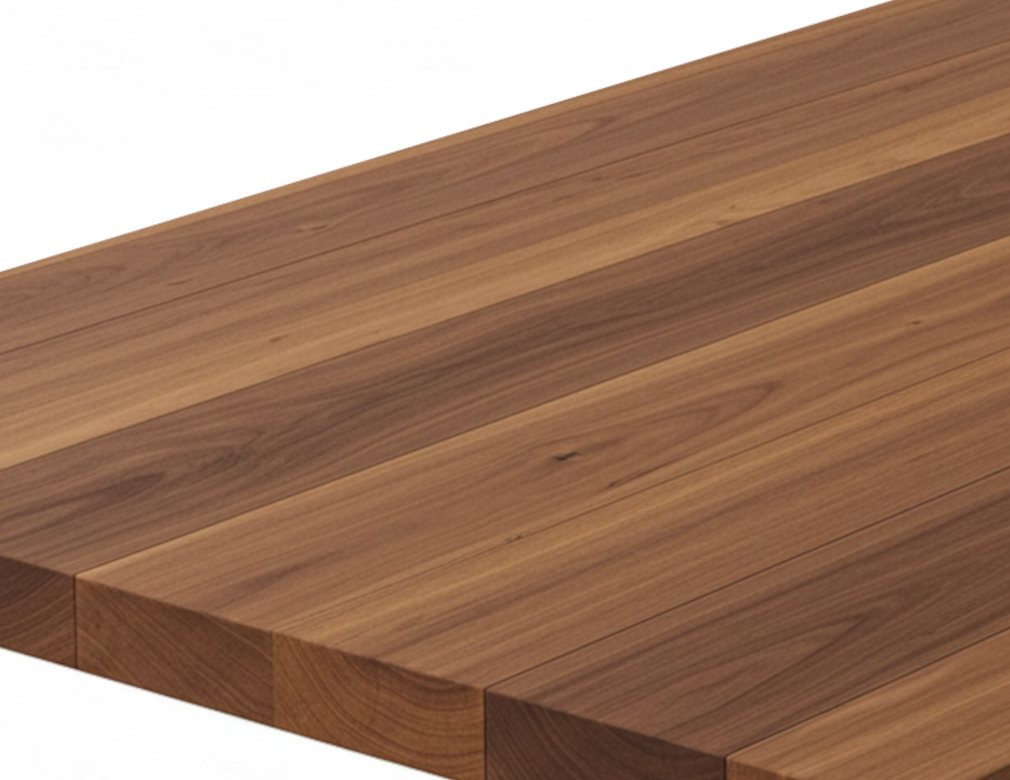
Edge grain vs plank, in black walnut.
Same species, same finish. Edge grain packs narrow strips into a thick, even top; plank lays wide boards flat so each one's grain reads like furniture.

Chop on it every day? End grain. The whole kitchen? Edge grain. The centerpiece? Plank.The rule of thumb
The three, compared.
| Edge grain | End grain | Plank | |
|---|---|---|---|
| Look | Long, even stripes | Checkerboard of growth rings | Wide boards, cathedral grain |
| Under a knife | Good | Best; marks close up | Shows marks most |
| Stability | Best | Good | Good; wide boards move more |
| Upkeep | Normal | More oil (end fibers drink it) | Normal |
| Thickness | 1-1/4" to 4" | 2-1/4", 3", 4" or 7" | 1-1/4", 1-1/2", 1-3/4" |
| Largest size | 155" × 72" (2"+ thick over 42" wide) | 155" × 72" | Up to 42" wide |
| Finishes | All four | Natural oil or unfinished | All four |
| Sink / cooktop cutouts | Yes, in the builder | Custom quote | Yes, in the builder |
| Rush production | Available | Not available | Available |
Any top under 2" thick is limited to 42" wide, whatever the construction. A wide island needs a 2" or thicker top to stay flat.

What each costs.
The same 6-foot by 25-inch hard maple top with a natural oil finish, delivered: $1,251 in edge grain, $1,251 in plank, and $2,377 in end grain at 2-1/4" thick.
End grain costs more because it is thicker and takes far more cutting, gluing and flattening. See the full price guide for every size and wood.
Which to choose, by room.

Not sure? Edge grain is never the wrong answer. Around a sink, pair it with conversion varnish, our most waterproof finish.
Construction, answered.
What is the difference between edge grain and end grain butcher block?
Is end grain better than edge grain for a countertop?
Which butcher block is the most durable?
What is plank or face grain butcher block?
Can end grain countertops have a sink cutout?
How much more does end grain cost?
Pick your construction, price your top.
Choose edge grain, end grain or plank in the builder and the price updates as you go.